
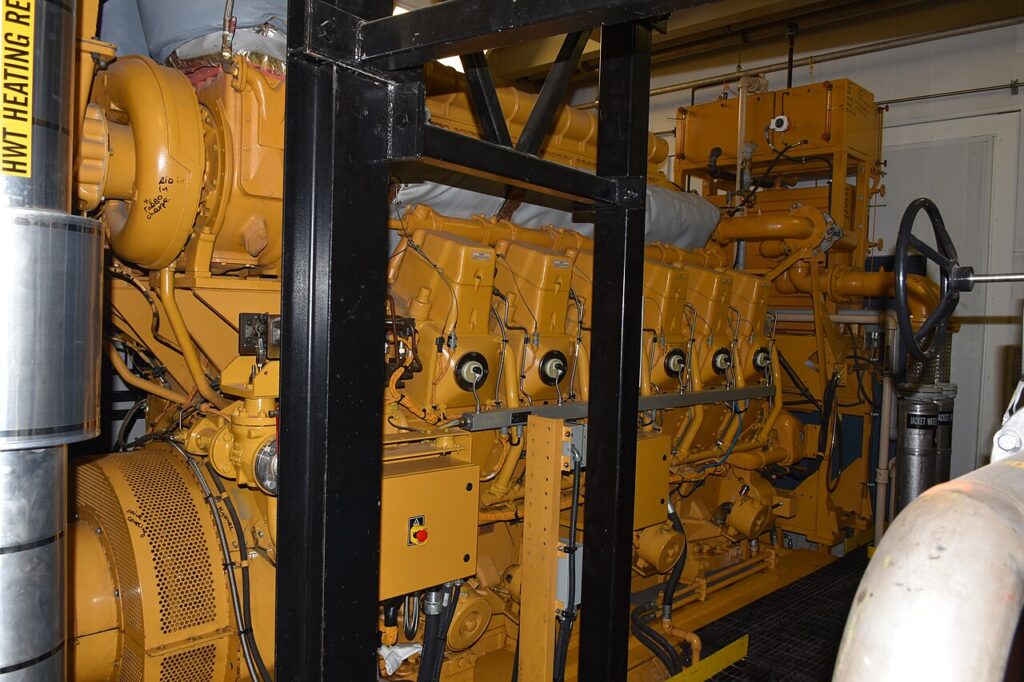
At Higenset, we’ve seen what happens when generators skip proper load testing before shipment. A 500 kVA unit arrived at a mining site in Ghana last year and failed within 72 hours. The buyer lost two weeks of production and had to pay for emergency repairs. That story alone is reason enough to take load bank testing seriously.
What Is Load Bank Testing?
Load bank testing is essentially a stress test for your generator. We connect the unit to a resistive or reactive load bank and run it at 100% capacity (or close to it) for an extended period, typically 2 to 8 hours. During the test, we monitor voltage stability, frequency, oil pressure, coolant temperature, exhaust temperature, and fuel consumption in real time.
Think of it as putting your generator on a treadmill and seeing how it performs under maximum effort. Unlike a simple start-up check, load bank testing reveals problems that only appear under heavy load conditions.
Why Load Testing Matters Before Delivery
1. Catches Hidden Defects Early
Some issues only show up when the generator is working hard. A worn fuel injector might perform fine at 30% load but fail at 80%. Load testing catches these problems at the factory, where repairs are fast and cheap, rather than at a remote job site where downtime costs a fortune.
2. Verifies Rated Capacity
We’ve seen generators rated for 500 kVA that could only deliver 420 kVA reliably. Load bank testing confirms the unit actually produces its stated power output. For buyers who’ve paid for a specific capacity, this verification is essential.
3. Validates Cooling System Performance
Running at full load pushes the cooling system to its limit. If the radiator is undersized, the fan belt is loose, or the coolant flow is restricted, load testing will reveal rising temperatures before the unit ships. Overheating is one of the top causes of generator failure in the field.
4. Tests Engine and Alternator Under Real Conditions
The alternator, AVR (Automatic Voltage Regulator), and governor all need to work together smoothly under varying loads. Load testing simulates the actual conditions the generator will face on-site, including step-load changes and steady-state operation.
5. Provides Baseline Performance Data
The test report gives you a documented baseline of the generator’s performance at the time of delivery. This is valuable for warranty claims, future maintenance planning, and comparing performance over time.
What a Standard Load Test Report Includes
When we arrange load bank testing for our clients, the report typically covers:
- Test duration and load levels (25%, 50%, 75%, 100%, 110% overload)
- Voltage and frequency readings at each load step
- Oil pressure and coolant temperature trends
- Exhaust gas temperature measurements
- Fuel consumption rate at different loads
- Any alarms, trips, or abnormalities observed
- Overall pass/fail assessment
Common Issues Found During Load Testing
In our experience working with Chinese generator manufacturers, here are the most common problems that load testing catches:
Overheating at rated load: The most frequent issue. Often caused by undersized radiators or restricted airflow. We insist on proper radiator sizing during the specification stage.
Voltage instability: Usually an AVR calibration issue or a problem with the alternator windings. Easy to fix at the factory, very expensive to diagnose on-site.
Fuel system starvation: The engine runs fine at partial load but starves for fuel at full load. This can indicate clogged filters, a failing fuel pump, or improperly sized fuel lines.
Excessive exhaust smoke: Black smoke under load suggests poor combustion, often due to incorrect fuel injection timing or air intake restrictions.
Should You Insist on Load Testing?
For any generator project above 200 kVA, we strongly recommend load bank testing. For mission-critical installations like hospitals, data centers, and mining operations, it should be considered mandatory.
The cost of a load test is typically $500 to $2,000 depending on the unit size and test duration. Compare that to the cost of a generator failure on-site: emergency service calls can run $5,000 to $20,000, plus the cost of downtime, lost production, or compromised safety.
At Higenset, we coordinate load bank testing with the manufacturer on behalf of every client who requests it. We receive the test report, review it with our technical team, and only confirm shipment once the unit passes all criteria. It’s one more layer of protection that ensures our clients get a generator that works from day one.
Need help specifying load bank testing for your next generator order? Contact our team for a technical consultation.
Need a Generator Quote?
Talk to Higenset’s engineers about sizing, pricing, and shipping to your site.