
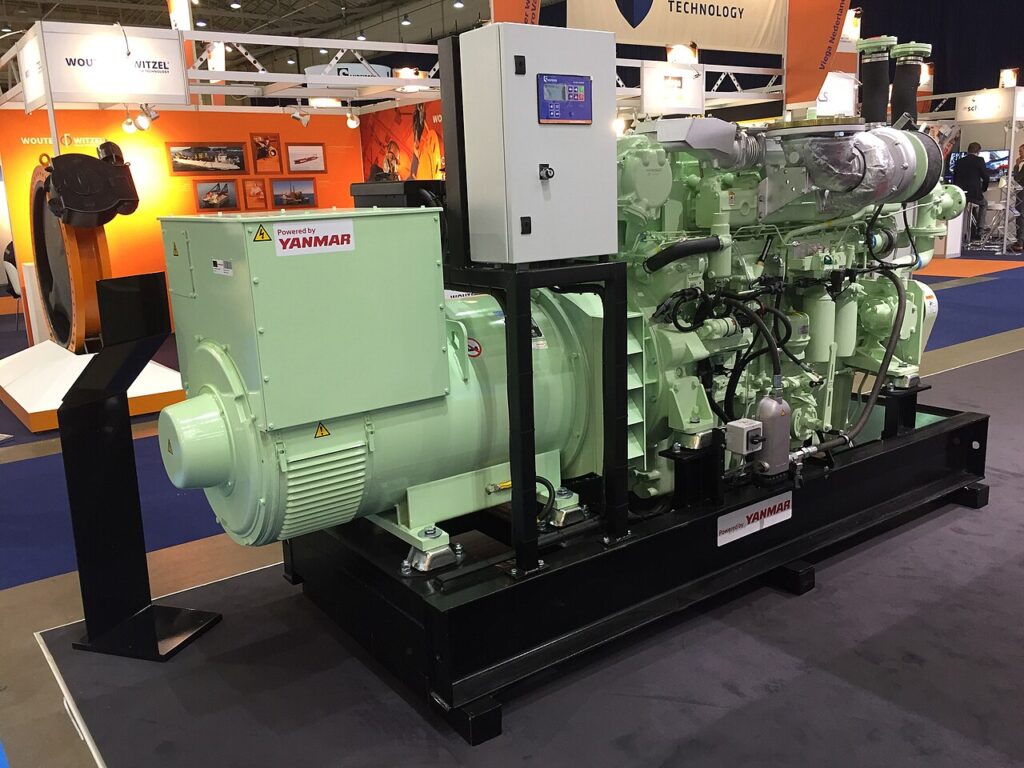
Choosing the right diesel generator set is not only a price comparison. For overseas buyers, the first technical risk often appears before the quotation is issued: the generator is sized from incomplete load information, unclear operating duty, or assumptions that the supplier cannot verify.
This guide explains the key information buyers should prepare before asking Chinese generator suppliers for a quote. It is written for procurement teams, contractors, distributors, and project owners who need a practical way to discuss diesel generator sizing with suppliers.
1. Start With the Real Load List
A generator quotation should begin with the equipment that will be powered. A simple total power number is useful, but it is not enough. Buyers should list each major load and identify whether it is a motor load, heating load, lighting load, electronic load, pump, compressor, chiller, crane, welder, or general distribution load.
The supplier needs to understand both the running load and the starting behavior. Some loads draw a much higher current during startup. If these loads start at the same time, the generator may need a larger capacity or a different starting method.
- Equipment name and quantity
- Rated power in kW or HP
- Voltage, phase, and frequency
- Starting method, such as direct-on-line, star-delta, soft starter, or VFD
- Whether the load starts individually or together with other loads
- Expected running hours per day
2. Understand kW, kVA, and Power Factor
Generator capacity is commonly discussed in kW and kVA. kW is the real power used by the load. kVA is the apparent power that includes the effect of power factor. For many diesel generator quotations, suppliers use a typical power factor of 0.8 for three-phase generator sets.
As a simple reference, kW equals kVA multiplied by power factor. For example, a 100 kVA generator at 0.8 power factor is commonly rated around 80 kW. Buyers should avoid comparing one supplier’s kW rating with another supplier’s kVA rating without checking the power factor.
It is also important to confirm whether the quotation is based on standby power, prime power, or continuous power. These ratings are not the same, and the correct choice depends on how the generator will be used.
3. Confirm the Operating Duty: Standby, Prime, or Continuous
A standby generator is mainly used when the utility power fails. It may run for limited hours and usually does not carry overload for long periods. A prime power generator is used where the generator is a main power source for variable loads. A continuous power generator is used for long-duration operation at a steady load.
When buyers only say “backup generator,” suppliers may assume standby rating. If the project actually needs long daily running hours, the selected engine and radiator configuration may need to be reviewed more carefully.
- Use standby rating for emergency backup applications.
- Use prime rating for variable load applications where the generator operates for many hours.
- Use continuous rating for steady long-running applications.
- Tell the supplier the expected annual running hours and average load percentage.
4. Check Motor Starting Current
Motor starting is one of the most common reasons generator sizing becomes inaccurate. Pumps, compressors, fans, crushers, and similar equipment can require a high starting current. If the generator is too small, voltage dip can cause unstable startup or trip protection devices.
Buyers should tell suppliers the largest motor size, starting method, and whether it starts with other equipment already running. If the project includes several motors, the starting sequence should be discussed. In many cases, staged starting can reduce the required generator capacity compared with starting all motors at once.
5. Match Voltage, Frequency, Phase, and Local Conditions
Generator configuration must match the destination market and project site. Before quotation, confirm voltage, frequency, phase, neutral requirement, grounding method, ambient temperature, altitude, humidity, and installation location.
High ambient temperature and high altitude can reduce engine performance and cooling capacity. Outdoor installation may require a weatherproof silent canopy, larger radiator consideration, anti-condensation heater, or special coating. Coastal or dusty environments may also affect filtration and enclosure design.
6. Add a Practical Reserve Margin
A generator should not be selected so tightly that every small change creates a problem. A practical reserve margin helps cover future load growth, measurement uncertainty, and operating variation. However, oversizing too much can also create problems, especially if the diesel generator runs for long periods at very low load.
For many projects, buyers should discuss the expected average load, peak load, and future expansion with the supplier. The right margin depends on the application, load type, engine rating, and operating pattern.
7. What to Send Suppliers Before Requesting a Quote
A clear inquiry helps suppliers provide a more accurate quotation and reduces later revisions. Buyers can use the following information template:
- Required power rating, or full load list if rating is not confirmed
- Application: standby, prime, or continuous use
- Voltage, frequency, phase, and destination country
- Largest motor load and starting method
- Indoor, outdoor, silent canopy, open type, trailer, or containerized design
- Expected daily running hours and average load percentage
- Preferred engine, alternator, and controller brands
- Need for ATS, synchronization panel, fuel tank, cables, spare parts, or tools
- Testing requirement, such as load bank test and inspection report
- Shipment destination and required documents
8. How to Review the Supplier Quotation
After receiving quotations, buyers should compare more than the headline capacity and price. Check the engine model, alternator model, controller, breaker, radiator, fuel tank, canopy, battery, charger, muffler, documents, testing scope, warranty terms, and delivery time.
If one quotation is much cheaper, review what is missing. Common omissions include ATS panel, synchronization control, larger fuel tank, soundproof canopy details, exhaust accessories, spare parts, load bank testing, export packing, and documentation.
Conclusion
Correct generator sizing starts with clear load information and realistic operating conditions. Overseas buyers can reduce sourcing risk by preparing the load list, confirming kW and kVA, defining standby or prime use, checking motor starting current, and reviewing the quotation scope carefully.
Higenset helps overseas buyers review generator requirements, compare supplier quotations, check technical configurations, and follow up production and shipment details in China. If you are preparing a diesel generator inquiry, share your power rating, load list, voltage, frequency, destination, and application so the sourcing process can start with clearer technical information.
Need a Generator Quote?
Talk to Higenset’s engineers about sizing, pricing, and shipping to your site.
Request a Quote