
Why Quality Control Matters When Sourcing from China
Sourcing generators from China can offer significant cost advantages, but price alone should never be the deciding factor. Overseas buyers who focus only on the quotation often discover quality issues after the equipment arrives at their destination, when corrections are expensive or impossible. At Higenset, we believe that a well-structured quality inspection and compliance process is just as important as selecting the right engine and alternator.
This guide explains what international buyers should verify at each stage of the procurement process, from initial factory evaluation to pre-shipment testing and documentation review.
Factory Audit: Know Your Supplier Before Ordering
Before placing a large order, it is worth understanding whether the factory has the technical capability and quality systems to deliver what they promise. A basic factory audit should cover production capacity, quality control procedures, testing equipment, engineering team experience, and certification records.
Key questions to ask include whether the factory holds ISO 9001 certification, whether they manufacture the complete generator set in-house or outsource major components, and whether they have experience exporting to your region. A factory that produces open-type sets for the domestic market may not have the same capability as one that regularly builds sound-attenuated or containerized units for overseas projects.
Production Inspection: Check Progress During Manufacturing
Waiting until the generator is finished to inspect it is risky. Production inspection at multiple stages helps catch problems early, when they are easier and cheaper to fix. Common inspection points include:
- Incoming material inspection: Verify that the engine, alternator, radiator, and controller match the agreed brands and model numbers.
- Assembly inspection: Check that mounting, wiring, piping, and alignment follow the technical drawings.
- Protective treatment: Confirm that painting, surface preparation, and corrosion protection meet the specified standards, especially for coastal or humid environments.
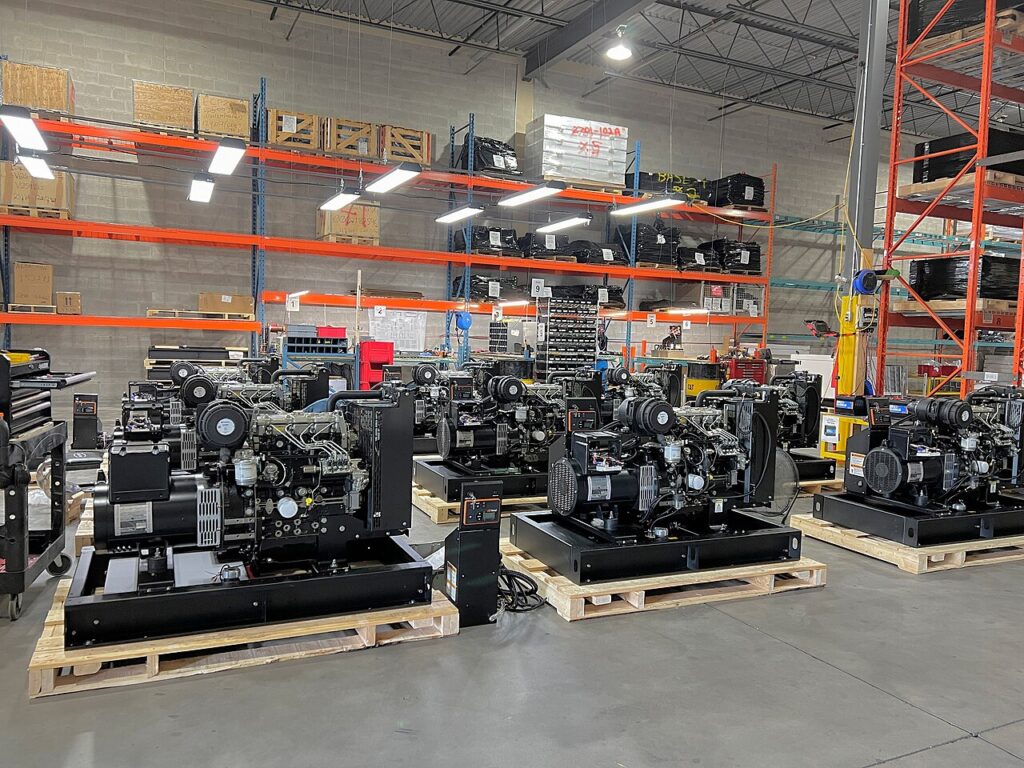
At Higenset, we coordinate production inspections based on each project schedule, providing photos and reports so overseas buyers can follow progress without traveling to the factory.
Testing Standards: What Should Be Verified Before Shipment
A generator set should be tested before it leaves the factory. The scope of testing varies by project, but at minimum it should include:
- No-load startup and shutdown test
- Voltage and frequency stability check
- Load test at specified percentage of rated power
- Emergency stop function verification
- Oil, coolant, and fuel system leak inspection
- Controller alarm and protection function test
For critical projects, additional testing may include full-load continuous running tests, sudden load change response tests, and noise level verification for silent canopies. Buyers should agree on the testing protocol in advance and request a test report with measured data.
Compliance and Certification Requirements
Different markets have different compliance requirements. Overseas buyers should confirm which standards apply to their destination country before placing an order.
- ISO 8528: International standard for reciprocating internal combustion engine driven alternating current generating sets, covering ratings, performance, and testing.
- CE marking: Required for generators sold in the European Economic Area, covering safety and electromagnetic compatibility.
- EPA certification: Required for diesel engines imported into the United States.
- Local grid codes: Some countries have specific requirements for voltage regulation, frequency stability, or protection settings.
Suppliers should be asked to provide copies of relevant certificates and to confirm that the specific engine model in the generator set is covered by those certificates. A factory may hold ISO 9001 certification, but that does not automatically mean every engine they use is EPA certified.
Documentation: What Should Travel with the Generator
Complete documentation is essential for customs clearance, installation, commissioning, and long-term maintenance. The standard export documentation package should include:
- Commercial invoice and packing list
- Bill of lading or airway bill
- Certificate of origin
- Generator test report
- Engine and alternator factory certificates
- Operation and maintenance manual
- Electrical wiring diagram
- Parts list and recommended spare parts
For some regions, additional documents such as import licenses, inspection certificates, or conformity declarations may be required. Preparing these documents early avoids shipment delays.
Common Pitfalls to Avoid
- Skipping the factory visit or audit: Photos and videos help, but they do not replace understanding the supplier’s actual capability.
- Accepting verbal promises on specifications: All technical requirements should be documented in the purchase order or contract.
- Ignoring the testing stage: A generator that has not been properly tested under load may fail on its first day of operation.
- Assuming certificates cover all models: Certificates are model-specific. Verify that the exact engine and alternator in your order are listed.
- Delaying documentation preparation: Export paperwork takes time. Start preparing documents well before the shipment date.
How Higenset Supports Quality Assurance
For overseas buyers who cannot visit Chinese factories in person, Higenset provides end-to-end sourcing support including supplier screening, production inspection coordination, pre-shipment testing supervision, and export documentation preparation. Our engineers review specifications, witness testing, and verify that the delivered product matches the agreed technical requirements.
If you are planning to source generators from China and want to ensure that quality and compliance are properly managed, contact our team to discuss your project requirements and inspection needs.
Need a Generator Quote?
Talk to Higenset’s engineers about sizing, pricing, and shipping to your site.