
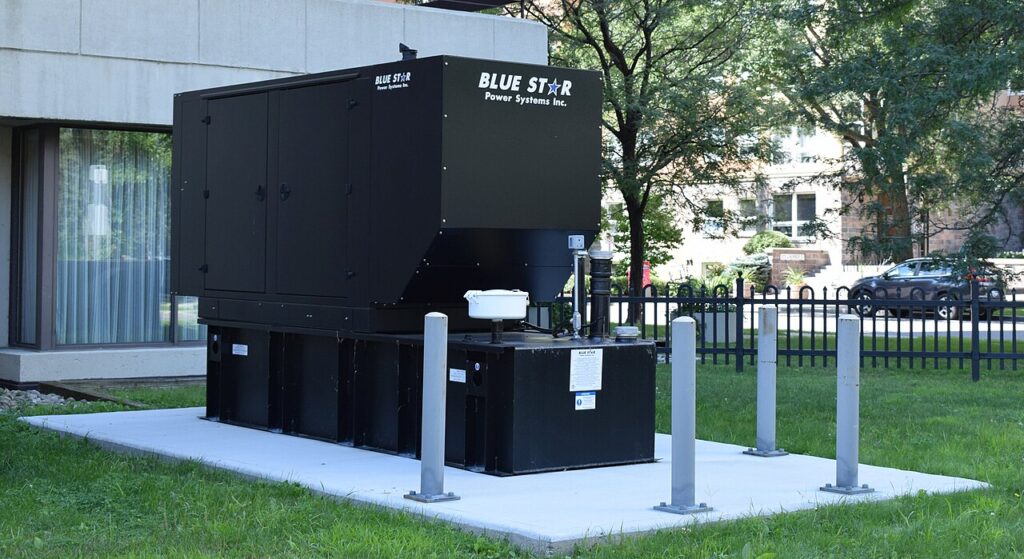
Silent Power Is Becoming a Standard Request
Over the past year, we have seen more overseas buyers ask for silent generator sets instead of standard open-type units. The request is not limited to hotels or hospitals anymore. Construction companies, telecom contractors, mining service teams, commercial building owners, and rental fleet operators are all paying closer attention to noise control.
The reason is simple: generators are being installed closer to people. Backup power is now required in city centers, mixed-use buildings, islands, off-grid communities, and remote telecom locations where the equipment may run near staff accommodation or public areas. In these environments, a generator that is technically powerful but too noisy can still become a project problem.
What Buyers Are Asking For
Many inquiries now include noise targets together with power rating, voltage, frequency, engine brand, and delivery time. Common requests include silent canopies, residential exhaust silencers, anti-vibration mounts, larger fuel tanks, weatherproof design, and corrosion-resistant paint for coastal environments.
Some buyers also ask whether the generator can be tested before shipment with video evidence. At Higenset, pre-shipment testing usually covers startup, voltage and frequency stability, load response, emergency stop, leakage checks, and visual inspection. For silent units, we also review canopy fit, door sealing, ventilation paths, and exhaust installation because these details affect long-term site performance.
Urban Projects Need Better Noise Control
Urban construction sites are one of the clearest examples. A generator may need to power tower cranes, lighting, welding machines, pumps, site offices, and security systems, but the site may be surrounded by apartments, offices, or hotels. Lower noise helps contractors keep work moving while reducing complaints from nearby residents and businesses.
For these projects, the generator is often moved several times during the construction period. A compact silent canopy, strong lifting structure, and easy maintenance access become just as important as the engine brand.
Telecom and Commercial Sites Are Changing
Telecom operators are also asking for quieter backup power, especially for towers close to villages, schools, clinics, and roadside communities. In many remote regions, the generator may run for long hours when grid power is unstable. Noise control improves acceptance from local communities and makes maintenance work more comfortable for technicians.
Commercial facilities such as supermarkets, small factories, logistics warehouses, and office buildings have similar concerns. They need emergency power, but they also need equipment that can sit near loading bays, parking areas, or service corridors without becoming a daily disturbance.
Silent Design Must Still Protect Performance
A silent generator is not only about reducing sound. It must also keep the engine cool, protect the electrical system, allow easy servicing, and survive the local environment. In hot climates, airflow design is especially important. If a canopy reduces noise but restricts ventilation, the generator may overheat under load.
This is why experienced buyers look beyond a single dB(A) number. They check radiator capacity, air inlet and outlet layout, exhaust back pressure, door sealing, canopy thickness, vibration isolation, and maintenance access. These details decide whether the generator remains reliable after months of operation.
How Higenset Supports Silent Generator Projects
For overseas buyers, the challenge is often comparing quotations that look similar on paper. Two suppliers may both describe a unit as “silent,” but the actual canopy structure, silencer grade, paint quality, controller configuration, and testing process may be very different.
Higenset helps buyers review technical requirements before production, match generator configuration to site conditions, coordinate factory inspection, and prepare shipping documents. For projects that require low-noise operation, we also recommend confirming installation clearance, exhaust direction, ambient temperature, and local noise expectations before the final order.
Looking Ahead
Silent generator demand is likely to keep growing as backup power moves closer to daily life and as buyers become more careful about site acceptance. For many projects in 2026, the right question is no longer whether a generator can produce enough power. Buyers also want to know whether it can do so quietly, reliably, and with fewer installation problems.
If you are planning a silent generator purchase for a construction site, telecom project, commercial facility, hospital, hotel, or remote community, our team can help compare options and prepare a practical configuration for your working conditions.
Need a Generator Quote?
Talk to Higenset’s engineers about sizing, pricing, and shipping to your site.